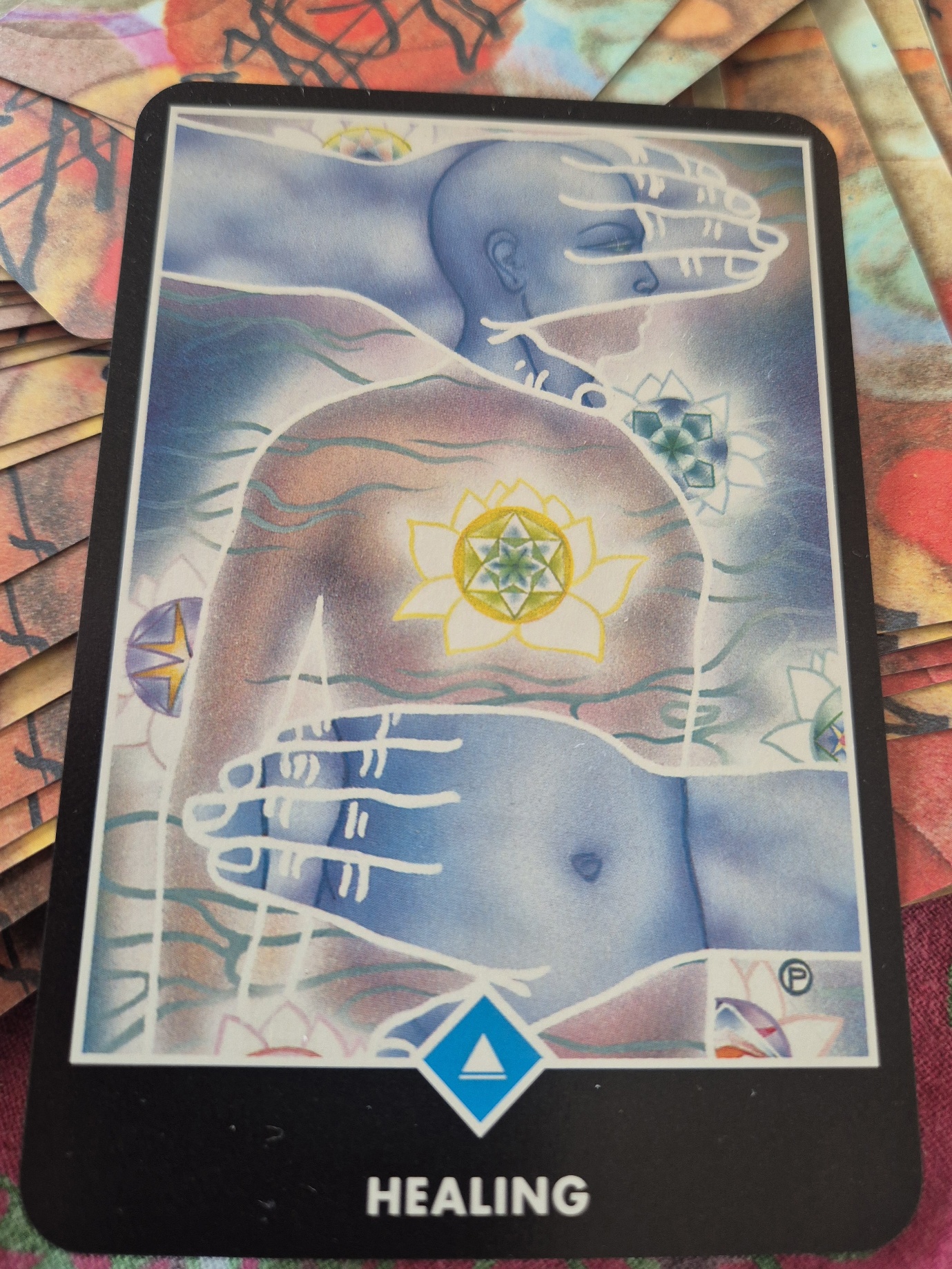
Whatever our souls are made of, his and mine are the same.
Emily Brontë, Wuthering Heights – Cathy
I now realise that the sacred space I created for myself, the room in which I do my writing, is really a reconstruction — a reactivation, if you will — of my boy-hood space. When I go in there to write, I’m surrounded by books that have helped me to find my way, and I recall moments of reading certain works that were particularly insightful. When I sit down to do the writing, I pay close attention to little ritual details — where the notepads and pencils are placed, that sort of thing — so that everything is exactly as I remember it having been before. It’s all a sort of ‘set-up’ that releases me. And since that space is associated with a certain kind of performance, it evokes that performance again. But the performance is play.
Joseph Campbell, Reflections on the Art of Living
Love rests on two pillars: surrender and autonomy. Our need for togetherness exists alongside our need for separateness.
Esther Perel
As a generalisation, men and women have different relationship needs and skills. Women are not the only ones with the answers, contrary to what some think or espouse. As my wife Nancy says, each of us has to weed our own garden: That is, when relationships go well, both partners, irrespective of gender, are paying attention to their own side of the street, to their own “stuff.” Both partners need to do the actual weeding and get help from others when the weeds prove too numerous and/or deep-rooted.
Relationships simply don’t work when only one partner works to till and care for his or her garden. One of the last things that my mentor, Ernie Larson, a phenomenal man who gave so much to our experience as people in recovery, told me shortly before he died, “Dan, I have become convinced that the only way any relationship can survive is if both partners are willing to do their work. Period.”
Dan Griffin, A Man’s Way Through Relationships.
Thursday nights are special. That’s when we have our Men’s Emotional Sobriety meeting, a meeting which takes place for an hour on Zoom, enabling men from all over the world to come together for an hour each week to go deeper and explore what it means to be a “response-able” man in recovery in the 21st century.
Why “response-able”? Because we recognise that our chaotic, sometimes overwhelming and traumatic experience of childhood had turned us into “reactors”, i.e., people who live life on impulse without the sense of calm and engaged non-attachment necessary to respond consciously and lovingly to whatever emerges each day as we walk our respective paths.
In the Big Red Book of ACA (Adult Children of Alcoholics, a programme specifically designed to help anyone who wishes to recover from growing up in chaotic or dysfunctional circumstances, with or without the issue of alcoholism) we find the 14 traits of untreated Adult Children, the last of which states that untreated Adult Children are “reactors rather than actors”.
Having grown up in circumstances in which we often felt unsafe or even threatened, we are always in a stance of defensiveness and high alert, parrying the balls that life hurls at us, non stop, in the cosmic pinball machine, never having or taking the time necessary to bring sufficient awareness to the situation, the awareness that would enable a creative, conscious response. We soon became exhausted and chose, as a survival strategy, to tune out of the insufferable pain we carried deep inside, in every tissue of our bodies.
The irony is that we need to encounter, embrace, and transcend this pain if we are to get well. The prerequisite is that we relinquish the old habits of “zoning out”; be they by means of ingesting substances or engaging in addictive processes, or both.
The pause, which recovery and Mental Fitness can then bring about, allows us to recognise that, as Allen Berger so succinctly puts it: “The problem is never the problem”.
What does this mean?
It means that, regardless of my age, I live in the echo chamber of my experience of childhood adversity. What seems to cause me today to be restless, irritable, and discontented is only the secondary issue, the one that activated the energy field of the original wound (original sin?).
Today I interpret such states (restless, irritable, and discontented) as a signpost directing me into the inner world where unhealed wounds beckon my attention. It is here, and only here, that the true treasures of recovery lie.
Of course, those signals can only be picked up when I am tuned into my body. Many of us have been disembodied for so long that it can be an arduous journey to get back into tune with our bodies again. Our collective recovery provides ample proof that this “somatic re-entry” is possible.
The secondary nature of the “here-and-now” issues does not mean that we should allow others to treat us as doormats or — god forbid — that we have a green light to be tactless or even cruel to others as we go about our business and conduct our relationships.
On the contrary, when we begin to embrace the untended or still-healing childhood wounds and provide the balm they need in order to heal, we find that we become less reactive in our day-to-day dealings with self, others, and circumstances. We come to realise, as Cathy does in Wuthering Heights, that we are all made of the same stardust.
This was not always my perception. When I came into recovery in 2003, I was lonely, exhausted, and “the only good guy left”. This is what acting out the addictive dynamic (substance or process-related, or both) does to us. Our view of reality becomes skewed. This shows up in everyday life as the Victim or Hyper-Vigilant Saboteur, egged on, as always, by the Judge, who tells us that the ingredients we have at our disposal today are not sufficient for us to be happy.
This sets us off on the “I’ll be happy when…” game, which is the fool’s game on which our entire consumer society is based. Many of us spend most or all or our lives in this mode.
Every time, even against all the odds, we achieve what we believe to be the conditions for happiness, we find that the goal posts have been moved, that the rules have been changed, or that the fleeting rush of success is ephemeral, leaving us feeling even more drained, hopeless, and lonely than before.
To heal — to get well — we must become liberated from the grip of our Saboteurs. They emerged very early on in childhood as our helpers, as coping strategies and survival mechanisms. As four-year-olds, we had little life experience to speak of, sparse resources, and, little or no guidance on learning how to live life on life’s terms.
This last point is especially true for those of us who grew up in households run by caregivers who, themselves, were untreated Adult Children.
Essential components of the life-affirming approach were not modelled to us by those in whose care we found ourselves and on whom we were totally dependent. Our adult caregivers did not teach us to draw wholesome boundaries. We did not learn from them the art of healthy conflict. Nor did they set good example in practising self-care.
We may have been subject to abuse; physical, emotional, spiritual, or even sexual. We may have been expected to carry our parents emotionally or do the job of rearing their children, our own siblings (parentification). We could extend the list ad infinitum.
Later in life, if we are lucky, we will crash and burn without enduring mortal wounds. Then the real work begins.
In taking responsibility for our inner wounds, we begin to heal and thrive. We become actors, no longer reactors. The actor has all of the advantages of restored primordial trust, creativity, innovation, an inner compass of deeply held values, and the ability to put insights into practice.
We discover and cultivate “the gap between stimulus and response” as Viktor Frankl so eloquently put it, such that we begin to respond to life in a manner of loving kindness. “In that gap lies our freedom to choose and our liberation,” Frankl taught.
After some time, we discover that we can develop behavioural patterns which are very different to those of the dependent people who raised us.
We cease denying and we do something about our post-traumatic dependency on substances, people, places, and things to distort and avoid reality. We have now entered the phase of post-traumatic growth.
Isn’t it amazing how life transforms even the most terrible experiences into gifts and opportunities? This will never happen against our will, however. We must open ourselves to the new reality for it to manifest. That, too, is a choice we get to make.
On the topic of the cause of our suffering — as opposed to pain which is an inherent part of life — it may be of great value to take in the words of Shirzad Chamine, the creator of the Positive Intelligence (PQ) Mental Fitness Programme, which has been gaining momentum in Silicon Valley and beyond over the past decade.
“I am a relatively predictable and consistent coach,” he writes. “When someone comes to me in mental or emotional distress, I hear the person out and show compassion for his or her suffering. But before we get too far into the discussion, I state the following key principles of Positive Intelligence: All your distress is self-generated. To be more precise, all your distress in the forms of anxiety, disappointment, stress, anger, shame, guilt — all the unpleasant stuff that makes up your suffering — is generated by your own Saboteurs.”
“I emphasise all because I have found that under the influence of their Saboteurs, people want to bargain and negotiate. They claim that while they might agree that most of their distress is self-generated, their current distress is different and justified based on the severity of the situation.”
Recent examples from conversations come to mind such as: How could I possibly not be upset at myself for screwing up in that binge last weekend? How could I not feel stressed over a partner who cannot feel the gravity of the pain that I am feeling? How could I not be filled with anxiety over the possibility of losing my job and my house in this terrible economy?
“The answer,” Shirzad continues, “is always the same. Activate your Sage — those love-propelled Powers of Compassion, Explore, Innovate, Navigate, and Activate — to deal with the situation, and you will feel quite different.”
This lines up with my own experience. The good news is that if we have engaged the handbrake while driving, we can — with practice — equally learn to disengage it.
The tough part is stepping up and taking responsibility for my thoughts, my feelings, my emotions, and my actions, in the knowledge that we thereby forfeit the option of zoning out of our pain or of blaming others (or circumstances) for our predicament.
The next hurdle is the embracing of the sheer nakedness of the childhood pain from which I should have, perhaps could have, been protected, but was not. The reality of this ultimate betrayal is difficult to swallow.
It became the template for the subsequent betrayal of self.
With the healing energies of the Sage Powers, the on-going cultivation of Saboteur Interception, and the Mind Command mastery which facilitates the shift from Saboteur to Sage, we begin to grow in Mental Fitness, or what Bill Wilson, one of the founders of AA in the late 1930’s, called Emotional Sobriety.
We can then deal responsibly with whatever confronts us on our path. We can also support and encourage others — those willing to be transformed as we have been — to embrace this new way of living: sometimes explicitly, often times by simply modelling the new, life-affirming behaviours and sharing what we find along the way.