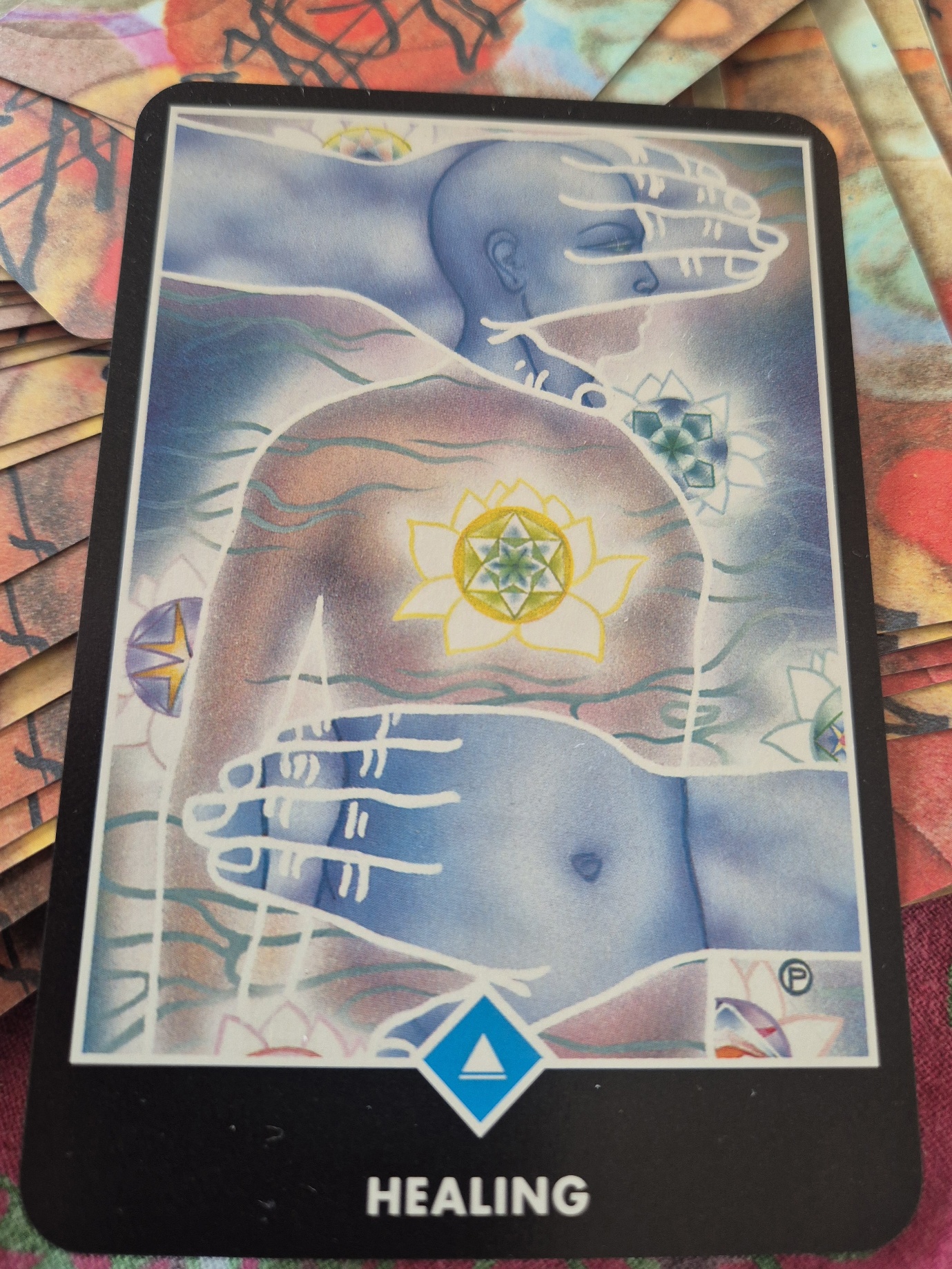
There is no separation between humans and God because of this mutual interabiding that expresses the indivisible reality of divine love. We flow into God — and God into us — because it is the nature of love to flow.
Cynthia Bourgeault
God desires simply that we remain connected, a branch on the vine, which is the love of God.
Richard Rohr
Change the way you look at things and the things you look at change.
Wayne Dyer
Through excessive reliance on thinking, reality becomes fragmented. This fragmentation is an illusion… And yet the universe is an indivisible whole in which all things are interconnected, in which nothing exists in isolation.
Eckhart Tolle, A New Earth
A small group of men recently spent a week together at the side of a wild river in a remote part of the west of Ireland, on a men’s retreat. We are of different ages, all born in different countries, and have grown up speaking different languages.
What we have in common, as men living in the first quarter of the 21st century, is that we have become aware of the adversity we experienced in a childhood spent in chaotic surroundings, and how that adversity led to us become “reactive” to triggers that initially threatened us as boys.
We emerged into adulthood somewhat emotionally anesthetised and emotionally volatile at one and the same time. Having consciously embraced a path of recovery, we are committed to shifting from reactive to responsible, to learning to live our lives as “response-able” men.
At a time when much confusion surrounds gender, sexuality, and the nature of masculine and feminine energies, each of us is engaged, in his own unique way, in the inner work of healing the wounds of childhood, embracing our masculine power, and cultivating Emotional Sobriety, or peace of mind.
The term Emotional Sobriety was coined by Bill Wilson, one of the two co-founders of Alcoholics Anonymous, formed ninety-one years ago this month.
In fact, during our retreat, Founders’ Day of Alcoholics Anonymous was being celebrated worldwide. This auspicious day is commemorated annually on June 10, the date in 1935 when co-founder number two, Dr. Robert Smith (“Dr. Bob”), had his last drink, less than two months after the two men had first met. Bill Wilson’s (“Bill W.”) had achieved sobriety in December of the previous year, after almost drinking himself to death over many troubled years.
This historic milestone marked the birth of what is now a global fellowship comprising several million members. It has, in turn, spawned many other fellowships to deal with a broad array of addictions (porn, work, screen, gambling, etc., to name only a few). All these fellowships practice the spiritual path of the Twelve Steps. The short form of the programme is sometimes expressed as: “Trust God, clean house, help others.”
The “clean house” piece was initially focussed on the damage we had caused in the world due to acting out our addictive dynamics. In recent years, however, we have also begun to shine light on cleaning up, metaphorically, the house in which we grew up, in terms of identifying and relinquishing patterns of thinking, feeling, and behaving which, though they secured our survival back then, are no longer serving us later in life.
The term “Emotional Sobriety” first appears in a reply to a letter Bill had received in 1953, almost eighteen years into his journey of recovery from alcoholism.
At the outset, Bill writes: I think that many oldsters who have put our AA “booze cure” to severe but successful tests still find they often lack emotional sobriety.
Perhaps they will be the spearhead for the next major development in AA — the development of much more real maturity and balance (which is to say, humility) in our relations with ourselves, with our fellows, and with God.
Those adolescent urges that so many of us have for top approval, perfect security, and perfect romance — urges quite appropriate to age seventeen — prove to be an impossible way of life when we are at age forty-seven or fifty-seven.
Here it is important to point out that our retreats are not only for people in Twelve Step recovery. Some participants, like me, are indeed in some form of Twelve Step recovery, some not. We are all drawn to developing and maintaining a daily practice which takes us from the impulsivity of our youth (adolescent urges) to the response-ability of a more awakened and fulfilling life.
We could be described as “the spearhead of the next major development” — i.e., breaking the generational chains of childhood trauma.
Bill refers to: “real maturity and balance (which is to say, humility) in our relations with ourselves, with our fellows, and with God.”
Balance in our relationships: Give and take, grief and joy, being supportive, asking for and accepting support, intimacy and solitude, vulnerability and fortitude, darkness and light.
Maturity is reflected in the awareness and cultivation of the gap between stimulus and response — as described by Viktor Frankl — in all our interactions, including in our relationship with ourselves, our self-talk.
Where we were inclined to beat ourselves up in the past for not meeting expectations — ours and those of others — we today respond first with compassion, before determining what would be an appropriate, life-affirming response to any given situation.
The more we become aware of this gap and cultivate our mastery of response rather than impulsive reaction, the more loving and supportive our relationships become, especially our relationships with ourselves, with others, and life in general (aka God).
If we are to follow the dictum of the Great Master, “to love one another as we love ourselves,“ we need to cultivate a loving relationship with ourselves as the foundation of all other healthy relationships.
Here we are talking about healing, self-care, self-awareness, not some form of navel gazing or obsession with self.
Humility is a word rarely used in today’s public discourse and, when it does crop up, is often misunderstood or misconstrued. Perhaps due to its proximity to the word humiliation, we tend to shrink back whenever it is uttered.
The word humble comes from Middle English, from Anglo-French, from Latin humilis low, humble, from humus earth; akin to Greek chthōn earth, chamai on the ground.
When we say a person has her feet on the ground, we mean rooted in reality, perception unclouded by denial, delusion, illusion, grandiosity, or anxiety, all states that skew our sense of reality.
If we can’t even recognise where we are, we will have enormous difficulty in getting where we want to go. It’s a bit like asking Google Maps to take me to “Cologne Cathedral” and when the prompt comes to submit my current location, I enter “unknown”.
Even Artificial Intelligence algorithms are going to have great difficulty in providing accurate directions under such circumstances!
Not knowing our current location is sometimes classified as “dishonesty”. This is the term used the Big Book of AA (published in 1939) which goes on to recommend a thorough inventory, and the subsequent sharing of our inventory with a sober person we trust, before making amends for the harm we have caused.
I get the approach (it has worked well for me on more than one occasion) while disagreeing with the moral slant —if dishonesty is interpreted as a moral failure, or character defect.
I see the opposite of “honesty” (accurate insight into where we really stand), rather, as “denial,” or its even more subversive cousins, “illusion” and “delusion”.
Having once asked an AA sponsor the difference between these, he described a hypothetical situation whereby we are sitting together in a café. He gets up to go to the toilet, asking me to keep an eye on his wallet.
On returning, he notices that €50 are missing. He asks me straight out if I have taken the money.
If true, and I knew as much, but replied in the negative; that, he said, is denial.
If I had taken the money but had successfully convinced myself that this was not the case; that, he said, is delusion.
My current sponsor pointed out this week that illusion is about smoke and mirrors, mirages, like the magician producing rabbits from a hat. There are no magic wands in recovery; so-called “magic thinking” belongs in the realm of active addiction.
Experience has shown that I am capable of all three. After all, until knocking on the doors of AA after twenty-six years of daily consumption of alcohol and dope, I didn’t have a problem. In fact, I was the only good guy left among all those “assholes” who were making my life so difficult!
How quickly I tried to erase the memory of each blackout, so I could make it through the shame and guilt of the following days.
And how often did grandiose ideas of success and fame propel me through years of workaholism!
Bill’s reference to “urges that so many of us have for top approval, perfect security, and perfect romance” deserves closer scrutiny.
The urge for top approval could be born of the neglect or emotional absence on the part of our caregivers when we were growing up.
The urge for perfect security tends to emerge from a childhood where a solid feeling of safety and sanctuary was in short supply.
Finally, the urge for perfect romance is often the byproduct of emotional coldness, of troubled, dysfunctional relationships we witnessed as children, in which the protagonists were incapable of drawing healthy boundaries, expressing their needs as true requests (not demands), and engaging in constructive conflict.
How could we have learned these vitally important skills if they were not modelled in our families of origin and explicitly taught to us by our adult caregivers?
The good news is that life presents opportunities to learn these skills later. The starting point is always a recognition and embracing of our woundedness, perceived weaknesses, and strengths today.
This was the bread and butter of our work this week, at the Men’s Emotional Sobriety Retreat in the Wild West of Ireland.
Our daily structure provided ample opportunities for group meditation, emotional check-in, exploration of our inner worlds, reflection and feedback, storytelling, culinary teamwork, shared meals, humour, and the joy of long hikes and shorter walks in breathtaking natural surroundings.
By connecting with the wildness out there, we all became more aware of the wildness within. This is the wildness of creativity, intuition, and finding our place in the overall scheme of life. The resulting relaxation of body and peace of mind brought us closer together as a group of exploring men, and each of us closer to the Source.
In this group experience of mutual trust, of neither separation from nor enmeshment with each other, the indivisible reality of divine love — between each other and between humans and Creation — found healing expression.