I said: What about my eyes?
God said: Keep them on the road.
I said: What about my passion?
God said: Keep it burning.
I said: What about my heart?
God said: Tell me what you hold inside it.
I said: Pain and sorrow.
God said: Stay with it. The wound is the place where the light enters you.
Rumi
If I were to reduce all my feelings and their painful conflicts to a single name, I can think of no other word but: dread. It was dread, dread and uncertainty, that I felt in all those hours of shattered childhood felicity: dread of punishment, dread of my own conscience, dread of stirrings in my soul which I considered forbidden and criminal.
Hermann Hesse, A Child’s Heart
Our search for our grief/loss can begin by asking this question: “What did I receive from my dysfunctional family and what would I have received from loving (i.e. “well”, PLi) parents in the same situation? The difference between what you got and what you could have received is the measure of loss or grief. This loss adds up over time.”
ACA Big Red Book, pg. 204
The GCOA (Grandchild of Alcoholics) may feel guilty individuating because she doesn’t want to abandon her parents. She can get caught in a bind: It feels good to have her parents’ undying love, but it comes at a price.
Tian Dayton, Emotional Sobriety: From Relationship Trauma to Resilience and Balance
From the earliest days of childhood, we grow up in a natural state of need and an attitude of anticipation of constant, consistent, attention, affection, and support from our adult caregivers. This is the way of the natural, healthy flow of the river of life, from one generation to the next.
In many cases, however, our needs were not met and our anticipations disappointed. This is principally due to the emotional and spiritual constraints of the family system and their manifestations as emotional unavailability, detachment, or coldness on the part of one or both parents. This is also true for the flip side of these characteristics, such as engulfment, control, and disrespect for personal boundaries.
Alice Miller published her first book, “The Drama of the Gifted Child”, in 1981 just when my interest in family dynamics and the emotional effects of childhood experience was beginning to stir in my soul. This interest was the result of the rising tide of grief, something of which I became increasingly aware over subsequent decades.
In this, her first book, she wrote: “If we’re lucky, we have, as infants and toddlers, at least one emotionally available parent who consistently fulfils our needs and responds to our desires for attention. Being held and comforted, having our feelings acknowledged and our upsets soothed are all critical for the healthy development of young children. This kind of attention creates a sense of safety and security that ultimately allows us to explore the world around us without excessive fear or unmanageable anxiety because we know we can count on the bedrock support of at least one caregiver.”
Miller, an innovator who experienced much pushback from the mainstream of her own profession, made popular some fundamental arguments which, before then, had been highly controversial and largely esoteric, i.e. restricted to the interactions of some pioneering psychoanalysts and their clients. These ideas have now become part of our general cultural dialogue.
Concepts such as the inevitability of childhood trauma in many of even the most well-meaning of families, and the idea that abused, neglected, or deprived children grow up to become enraged or isolated adults — often enmeshed in addictive dynamics to numb their pain, — are now generally familiar and, by many, accepted as true.
The work of Bert Hellinger (1925 – 2019, developer of Familienstellen – Family Constellation Therapy) became very popular in Germany, where I live, around the time that Miller’s work was first attracting global attention. While living on the grounds of a retreat location and training academy for several years in the first decade of this century, I had the privilege of participating in a large number of such constellation workshops, an experience which taught me much and for which I am most grateful.
Hellinger postulates several “Natural Laws” at play in every family system concerning Belonging, Hierarchy & Order, and Giving & Receiving, all of which make sense to me.
With respect to Belonging, he states that everyone, from the moment of conception, has an inherent right to belong to their family system. Excluding or forgetting anyone in the system can lead to subsequent members becoming entangled with the excluded individual (perhaps from earlier generations, even people of which these younger members have no cognitive knowledge), unconsciously identifying with them and carrying their unresolved issues. In other words, the family system is as sick as its secrets.
On Hierarchy and Order, he argues that those who follow must not and cannot interfere in the matters of those who came before. They cannot take on their pains or failures, even if motivated by love. This “arrogant” love is seen by the system as an interference and disrespect for the other’s destiny.
Finally, on Giving and Receiving, he argues that, just as in Nature as a whole, all Family Systems strive to achieve equilibrium. As with the ebb and flow of the tides, Nature is drawn towards homeostasis by compensating each interactional vector with a corresponding counter-vector.
According to Hellinger, this compensation system finds an exception in the relationship between parents and children. In this relationship, Nature determines that parents give, and children take, in the sense that the river consistently flows towards the ocean. An over-arching compensation occurs when the children become parents themselves and then give to their own children without expecting anything in return.
The payback or better “pay-forward” is produced through the creation of more life, by having children or by serving life through some form of work. Thus, life moves forward with balance for all.
The disappointment of our natural needs of cherished belonging through the lack of attention, affection, and protection from our caregivers spawns a grieving process. It may take decades of inner work to achieve conscious awareness of the inner wounds that have long been beckoning our attendance and loving-kindness.
In certain cases, like mine, this process is facilitated by the descent into substance addiction, hitting bottom, and the slow road of recovery, beginning with the willingness to see the truth of our predicament and a commitment to abstinence from the substances and/or behavioural patterns of our self-medication, as a prerequisite of deeper healing.
When I entered the rooms of AA, twenty-two years ago this week, I finally admitted what I had known but had successfully held in denial for over twenty-five years: that I was an alcoholic, and could not control my drinking. When I started, I couldn’t stop, and when I stopped, I couldn’t stay stopped. This is a terrifying state of affairs which only gets worse over time.
The cunning nature of the progression is well described in the following ditty:
A man takes a drink.
A drink takes a drink.
A drink takes a man.
My new friends in AA suggested placing my focus on what was needed in terms of new behaviours in the light of this discovery. The first, of course, was not to take the first drink. Much more was to come later, in the form of a new design for living as described in the Big Book of AA and summarised in the Twelve Steps. That work is still ongoing today, one day at a time.
I also had a bizarre hunch in those first months, one that has been recently confirmed in my heart and soul, without solid external evidence: That I am the grandchild of one or more alcoholics.
The confirmation of this hunch has come through my exploration and participation in the ACA Programme; an approach spawned from AA in the late 1970’s for those who wish to recover from growing up in dysfunctional family systems. (Though titled “Adult Children of Alcoholics”, the founders explicitly stated the broader remit from the very beginning).
As children growing up in the dysfunctional energy field (the “-ism”), we didn’t have the awareness to realise that members of previous generations were also carrying unprocessed grief. This helps explain but doesn’t excuse their dysfunctional behaviour. We often say our parents did the best they could with what they had. Unfortunately, what they had was too often not nearly enough, just as what they had received was not enough.
In her wonderful book, “Emotional Sobriety: From Relationship Trauma to Resilience and Balance”, Tian Dayton describes the inter-generational chain as follows: “Adult Grandchildren of Alcoholics are angry that their parents haven’t done their own work and look to their children to heal them. Angry that they feel in this lovelock and angry that they feel they can’t get angry because their parents cannot tolerate it.”
She goes on to point out that when Adult Children of Alcoholics (my parents?) do not do the long-term personal work that they need to recover from their trauma-related issues (they had neither the awareness nor the tools available today), they risk passing along their own distorted and unresolved relationships dynamics to their children.
Thus, the same unregulated family dynamics that the Adult Children of Alcoholics learned while growing up get recreated in the Adult Child’s own parenting. In this way, the grandchild of an alcoholic inherits the dynamics that are trauma related without the obvious trauma (their parents do not drink and are otherwise not visibly identifiable as addicts).
The Grandchildren of Alcoholics feel a sense of guilt over their parents’ childhood fate but confused about how their parents’ pain is being passed on directly to them. In this way the torch of dysfunction gets transmitted to another generation and may set the Grandchild of the Alcoholic up for the perils of a life of self medication without him knowing why.
Addiction, in other words, may skip a generation in this manner. The force field of the “-ism”, however, does not. Though this is all couched in general terms and it is sometimes difficult to detect more subtle or socially accepted forms of addictive behaviour (workaholism, sex addiction, co-dependency, screen addiction, consumerism, etc.), we can differentiate between active addiction and the destructive patterns of thinking, feeling, and behaving that result from growing up in a dysfunctional family system, on which addiction has a major influence, either directly or indirectly.
We can then identify those who are not entangled in addictions but have the “-ism”. The label I recently heard used for the latter is “ismatics”. We can then conclude that every addict is an “ismatic” but that not every “ismatic” is necessarily an addict.
Unprocessed grief from our childhood and our ancestors’ childhood can place us in a perpetual state of mourning. The generational nature of this is called compounded or “generational grief.” This grief can hold us hostage, undermine our ability to function well, and adversely complicate our adult relationships. It can contribute to medical problems, because grief is often accompanied by shame, sadness, depression, anxiety, insecurity, and isolation — a powerful concoction which jeopardises our general health and well-being.
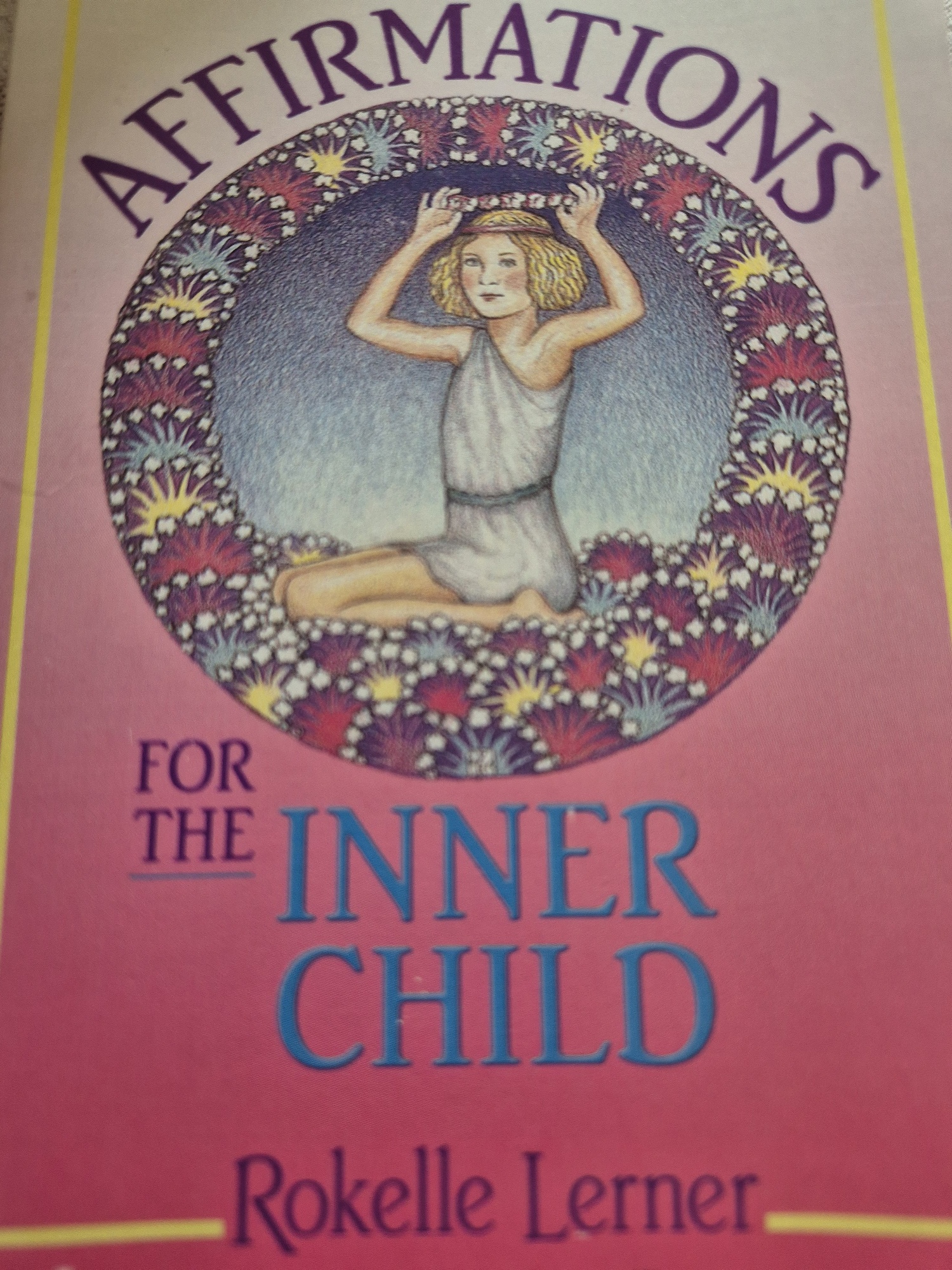
In participating in ACA and working the ACA Programme, we uncover the roots of our grief, identify what we hadn’t received as children, and recognise that the reactive coping mechanisms and survival strategies we originally developed in the early formative years are no longer of service to our life path today. ACA teaches us how to become our own loving parents, to re-parent the still needy, vulnerable, immaculate Inner Child in an on-going, conscious, loving relationship.
In doing so, we transform the grief into a new way of being and relating to others, thus discontinuing the dysfunctional cycle which has been wreaking havoc on our family system and destroying lives over many generations.
We get the opportunity to do the work for ourselves, and in the process, we not only gain mastery of living our lives on life’s terms but also help future generations, by transforming more generational grief than we transmit.