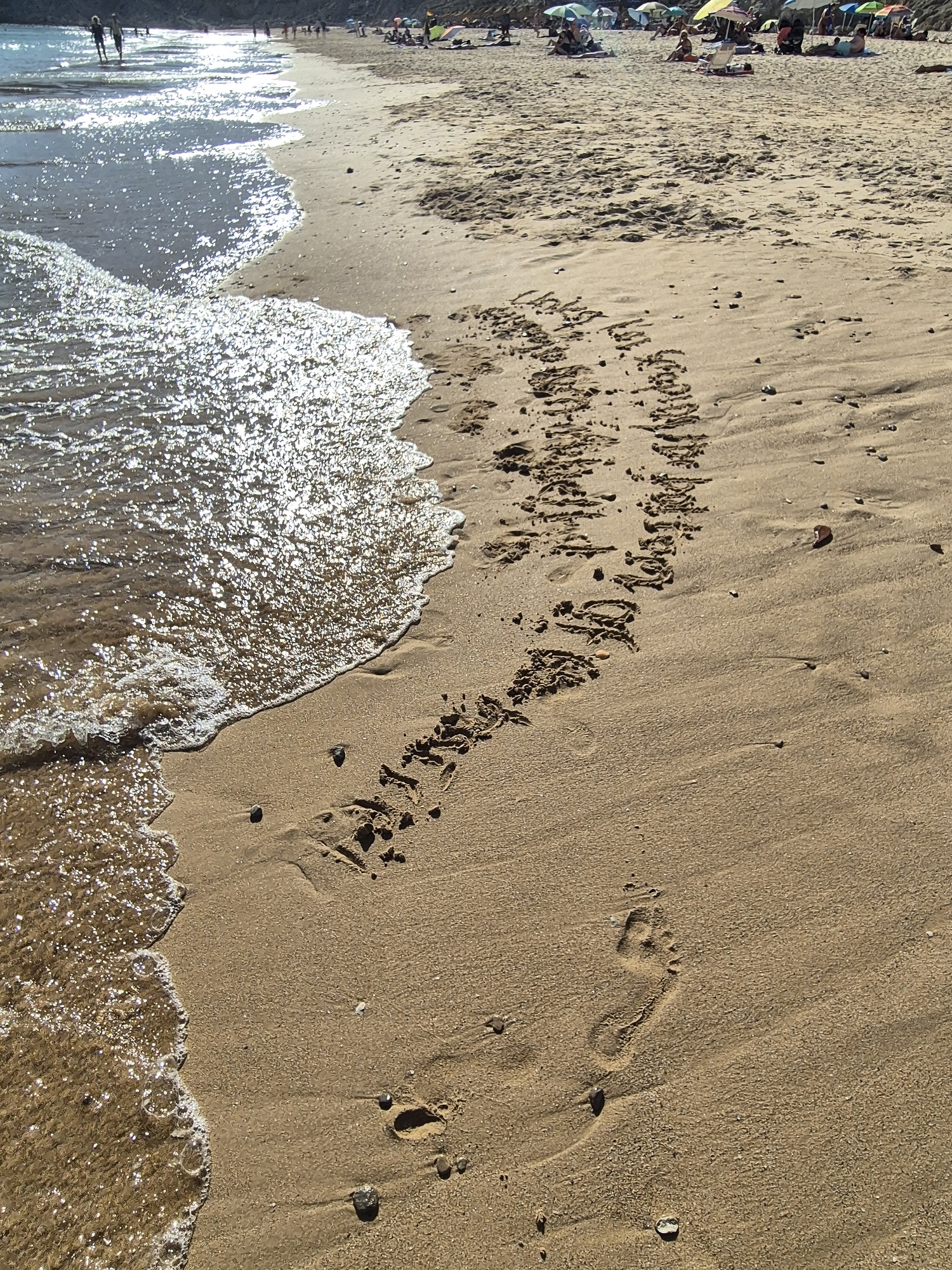
Father, forgive them, for they know not what they do.
Christ on Calvary
Every single thing we do in this life should come from love. Every action, every statement, the hardest thing you have to do, can you do it with love and not anger, fear, greed? Most business decisions come from fear and greed. Can you make that exact same decision but from a place of love?
Raj Sisodia, speaking on “human energy”
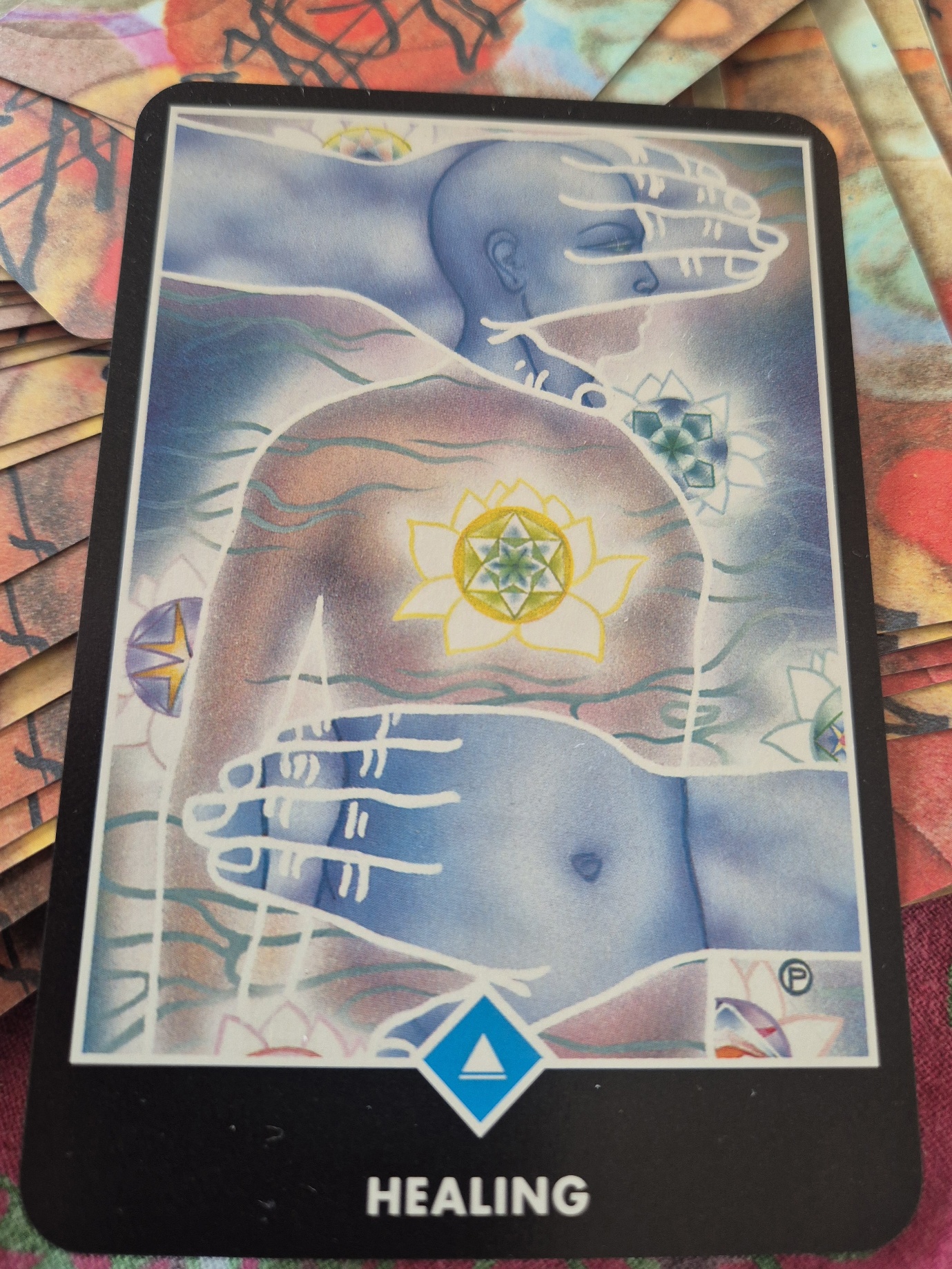
The resurrection is when we are healed. When the return of the right mind occurs, we are transformed.
Marianne Williamson
In a ritual which has its origins in modern-day Syria over four thousand years ago, humans placed their sins on a goat and sent it out into the wilderness, in the hope of absolution.
Later, during the era of the Temple in Jerusalem, once a year, on Yom Kippur, the High Priest of Israel sacrificed a bull as an offering to atone for any sins he may have committed unintentionally throughout the year. Subsequently he took two goats, which had been chosen by lot, and presented them at the door of the tabernacle: one to be “for YHWH”, which was offered as a blood sacrifice, and the other to be the scapegoat to be sent away into the wilderness.
Later in the day, the High Priest confessed the sins of the Israelites to God placing them figuratively on the head of this second goat, the scapegoat, who would symbolically “take them away”. A band of red wool was placed on the scapegoat’s head, and it was then led out into the wilderness, usually by a priest chosen for this task.
This was how people dealt with the issue of sin, inventory, confession, atonement, amends, and restitution many generations ago. From the perspective of modern depth psychology, it looks too simple to be true. And it is.
My understanding of the term scapegoat is: “One onto which the guilt belonging to others is projected, and thus the object of hostility”.
When I was a boy growing up in the Catholic Ireland in the sixties and seventies, we were told that Christ died on the cross to atone our sins. My sins! This was a heavy burden to bear for a sensitive eight-year-old boy.
Each return of the Easter season provided a reminder of this stark accusation: “It is because of your sins that that poor decent man, wearing a crown of thorns, bloodied, and exhausted, breathed his last while nailed to a cross”.
My naïve thoughts at the time revolved around the question: “If he were God, why didn’t he simply escape?” By not having done so, we humans were all put in an almighty bind. That was my rationale. This could have been a lifetime recipe for guilt and shame.
On the definition of sin, I can remember many lessons in junior school where countless examples of sin were expounded by the elderly Jesuits in whose care our education was placed. Original sin, venial sins, mortal sins, white lies, etc. Egged on by my classmates, I would distract the teachers from our regular school work by asking to which category this or that deed (or thought) belonged. While this may have saved us the inspection of our homework on some occasions, the psychological price was high.
Today, I prefer the definition of sin provided by Richard Rohr, contemporary Christian mystic, namely “missing the mark”. This implies that our thoughts, emotions, or deeds are not in alignment with our deeply held values.
To give them their credit, the Jesuits did teach us about analogy in literature and history. Their teachings seemed to go way beyond what most of them, themselves, were capable of grasping and applying to matters of the Catholic Church’s doctrine.
The feast day of Easter was first a pagan holiday of renewal and rebirth. Honoured in the early spring, it praised the pagan goddess of fertility and spring known as Ēostre. She was also known as the Goddess of the East, which would imply renewal, light, vitality, wonder, and abundance. These are the feelings I experience every time I go out in the spring morning to watch the sunrise.
So, what is the true meaning of Easter? This topic has been occupying my thoughts over the last few days.
A question I have learned to ask in my training in a variety of somatic and psychological modalities is: “What does this represent?” It can be used in every context, for example, an accident, an illness, an encounter, or a dream.
By taking this approach, we can avoid the trap on being seduced by content at the expense of process. The distinction between content and process centres on whether one is looking at a static snapshot of circumstances (content) or the dynamic, unfolding series of actions marking the trajectory of our lives (process).
The ancients who sent the goat into the desert, in the belief that they would thereby be absolved, were focussed on content. It is a simplistic solution to a problem they wanted to be rid of.
With the awareness and consciousness we have today, this no longer works, except for those who, by clinging to an ideology, become blinded to reality and truth.
Returning to the topic of Easter, what could the story represent? I believe that Jesus became the scapegoat to reveal the universal lie of scapegoating and of projection.
He became the target of betrayal, sin, and murder to reveal the hidden nature of scapegoating, not only so that we would see how wrong even moral and well-meaning people can be, but also to show us that forgiveness is something from which we, ourselves, benefit most.
Ultimately, he showed us that “death” is not the end but rather the prerequisite of “transformation”.
Furthermore, he rose above what was happening to him. Not only did he embrace his earthly fate, but he also forgave those who were in the process of torturing and murdering him, recognising that their level of consciousness prevented them for acting differently.
Not taking things personally is a major component of many spiritual paths and modern modalities. Two that stand out for me are the Twelve Steps of AA, and the PQ (Positive Intelligence) Mental Fitness Programme.
In AA we learn to draw up an inventory of our transgressions, ignoring completely what the other(s) might have done to us. This helps us to “keep to our side of the street”, as we progress along the path of recovery and healing. That is not to say that we condone the transgressions of others. Recovery teaches us how to draw boundaries in a healthy manner. “Love the sinner while rejecting the sin” is a good way to capture this stance.
In the PQ Programme, we get to understand that when people engage in destructive and harmful behaviours, it is because they are in the grip of their Saboteurs. It might be the Judge, Controller, Victim, or Hyper-Rational, to name only a few of the ten described by Shirzad Chamine, who developed the PQ Programme. This is as true for me as it is of all of us.
If, in a conflict, I begin to judge or attempt to control my opponent, I am indulging my own Saboteurs, which leads us to an intractable situation. By means of Saboteur contagion, the situation inevitably gets worse, often ending in mutual hurt and destruction.
The alternative is to consciously tap into our Sage Powers of Compassion, Exploration, Innovation, Navigation, and Activation. These five powers are all propelled by love.
With a degree of Mental Fitness, I can use the gap between stimulus and response to choose a Sage response and, thereby leave the realm of reactivity. In the state of heightened awareness that characterises Mental Fitness, we can pause, ground ourselves, and make the shift from Saboteur to Sage, or from “Fear to Love”, as Marianne Williamson puts it. This is how we become “response-able” members of society.
This shift is the definition of a “miracle”. Anybody with a degree of Mental Fitness is capable of making miracles.
At lower levels of consciousness, we are stuck in fear, driven by our Saboteurs. The PQ Programme, like any physical fitness programme, teaches us the daily practice necessary to build up and maintain this fitness. And just as in the realm of physical fitness, whenever we neglect our practice, we fall back. PQ, therefore, is a programme of daily practice, for life.
Our Mental Fitness enables us, for the most part, to operate from a place of love.
The gap between stimulus and response is perhaps represented by the three days of Easter between the crucifixion and the resurrection. Marianne Williamson referred to this in her recent Easter talk as “tomb time”. That resonates with me.
The resurrection is a metaphor for transformation. The caterpillar must die for the butterfly to emerge. It is natural to be afraid of such a process, just as it is natural to fear the end of this incarnation. The antidote to this fear is the belief that there are gifts and opportunities in every situation, even in the process of our own death.
The resurrection is when we become capable of making the shift, a prerequisite of which is to grieve our own suffering. It is when we learn to grieve what needs to be grieved and to divest ourselves of the tyranny of the Saboteurs, that we can become healed.
Transformation – resurrection – then becomes possible.